CRICKET
Jhulan Goswami’s 2017 World Cup Spell Bent a Chase in 10 Overs
On July 20, 2017, at Derby, England needed 82 runs from 18 overs with seven wickets in hand. The Women's World Cup semifinal seemed to be slipping from India's grasp. Then Mithali Raj tossed the ball to Jhulan Goswami, who had bowled only two overs for 12 runs. Over the next 10 overs, Goswami bent a settled chase into a collapse, finishing with 3 for 32 and taking India to their second World Cup final. This is the reconstruction of that spell, over by over, ball by ball.
The Chase That Looked Settled
England's innings had progressed steadily. After winning the toss and electing to bowl, India had restricted England to 107 for 2 in 30 overs, but the required rate was never alarming. At the 40-over mark, England were 160 for 2, needing 82 from 60 balls. The scoring rate was under 5 an over, and with Sarah Taylor and Tammy Beaumont at the crease, the chase appeared routine.
Goswami had been used sparingly. She bowled two overs early for 12 runs, then was taken off. India's attack had relied on spin through the middle overs, with Deepti Sharma and Poonam Yadav keeping things tight. But the spinners had bowled their quota, and the death overs loomed. Raj needed a breakthrough.
The pitch at Derby was dry and offered some seam movement, but not enough to alarm a set batter. England's batters had paced the chase well, rotating strike and waiting for loose balls. The equation seemed comfortable: 82 off 108 balls with seven wickets in hand. Conventional wisdom said England would coast home.
Raj's decision to bring back Goswami in the 41st over was a calculated gamble. Goswami had not bowled in the death overs for much of the tournament, but her record in big matches was impeccable. The captain trusted her senior bowler to deliver in a high-pressure moment.
Over 41: First Crack in the Batting Order
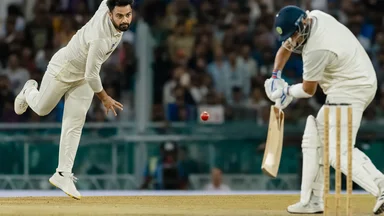
Goswami ran in with the score at 189 for 2. She pitched the first ball full and slanting across Sarah Taylor, who had made 30 off 45 balls. Taylor tried to drive through the off side, but the ball seamed just enough off the dry pitch to take the edge. It flew to slip, where Mithali Raj held a sharp catch. England 189 for 3, still 81 to get.
The wicket was classic Goswami: full length, seam movement, and a hint of away swing. Taylor had been batting confidently, but the delivery nipped away late, catching her outside the line. The crowd at Derby fell silent. India's players huddled around Goswami, sensing a shift.
Heather Knight walked in at number 4. She had been England's captain and best batter in the tournament. Goswami bowled the remaining five balls of the over tightly, conceding only two runs. The over read 1 for 2, and the required rate climbed to 5.5 an over.
That over changed the momentum. England had lost a set batter, and the new batter needed time to settle. Goswami had bowled just three overs, but her spell was already having an effect. The pressure was building.
Over 43: The Double-Wicket Blow
After a quiet over from Shikha Pandey, Raj turned to Goswami again for the 43rd over. England were 192 for 3, needing 70 from 48 balls. Tammy Beaumont was on 18 off 28 balls, having played second fiddle to Taylor. Goswami pitched the third ball of the over full and angled in. Beaumont tried to flick, but the ball swung late and struck her on the pad. The umpire raised his finger. Plumb lbw. England 199 for 4.
Beaumont reviewed, but replays showed the ball hitting middle and leg. It was a perfect inswinger from Goswami, delivered at a length that forced the batter to play. The pitch offered no demons, but Goswami's accuracy made it difficult to score freely.
The next ball was even better. Fran Wilson, the new batter, faced a delivery that seamed away from a good length. She edged it to the keeper, and Sushma Verma took a simple catch. Two wickets in two balls. England were 199 for 5, and the required rate had climbed to 6.5 an over.
Goswami had bowled five overs and taken three wickets. Her figures read 5–0–14–3. The Derby crowd, mostly neutral, was now firmly behind India. The chase that had looked settled was crumbling.
Over 45: Goswami Strikes Again
England's hopes now rested on Natalie Sciver, who had a reputation for counter-attacking. She came in at number 6 and immediately tried to take the attack to Goswami. In the 45th over, Sciver attempted to cut a short ball from Goswami. The ball was too close to her body, and she top-edged it to backward point, where a fielder took a comfortable catch. Sciver out for 14 off 12 balls. England 210 for 6, requiring 56 from 30 balls.
Goswami had now taken her fourth wicket of the innings (though one was a run-out earlier). Her spell had dismantled England's middle order. The required rate had climbed above 7 an over, and India's fielders were buzzing.
Sciver's dismissal was a testament to Goswami's ability to vary her length. After bowling full and swinging the ball, she pulled back her length, forcing Sciver to adjust. The short ball was not express pace, but it was well-directed, and Sciver's attempted cut was mistimed.
England's lower order now had to score 56 off 30 balls. Katherine Brunt and Jenny Gunn were experienced, but the required rate was steep. Goswami had bowled seven overs for 2 for 24, and her spell was far from over.
Over 47: Death-Overs Control
Raj brought Goswami back for the 47th over, her ninth. England needed 39 off 18 balls. Goswami's job was to keep things tight and force errors. She bowled three dot balls to Katherine Brunt, who was struggling to find the boundary. Brunt managed a single off the fourth ball, but Goswami conceded only two runs from the over. The equation became 37 off 12 balls.
Goswami's control in the death overs was remarkable. She mixed lengths, bowled yorkers when needed, and used the crease to change angles. Brunt, a powerful hitter, could not get her away. The over was a masterclass in death bowling under pressure.
After the 47th over, India's spinners took over for the 48th and 49th overs. Poonam Yadav bowled a tight 48th over, conceding 7 runs. The required rate remained above 12. In the 49th over, Shikha Pandey was hit for a six by Brunt, but she held her nerve, conceding only 8 runs. England needed 15 off the final over.
Goswami had done her job. She had bowled 10 overs, taken 3 wickets, and conceded only 32 runs. Her economy rate of 3.20 in that phase was exceptional, especially in a run chase.
The Final Reckoning: 10 Overs, 3 for 32
Pandey bowled the final over, and England fell short by 11 runs. India had reached their second World Cup final. Goswami's figures of 10–1–32–3 were the cornerstone of the victory. She had bowled 10 consecutive overs in the middle and death, a feat rarely seen in women's ODIs.
The spell redefined death bowling in women's cricket. Goswami had shown that seam movement and length changes could be as effective as raw pace. Her ability to swing the ball both ways, even on a dry pitch, made her unplayable.
Goswami's performance was not just about wickets. It was about control. She bowled 42 dot balls in her 10 overs, strangling the run flow. The required rate, which was under 5 an over when she started, ballooned to over 12 by the end.
India eventually lost the final to England, but Goswami's spell in the semifinal remains one of the great World Cup performances. It was a reminder that in cricket, a single bowler can change the course of a match with sustained pressure.
What the Spell Teaches Bowlers Today
Goswami's spell offers lessons for bowlers at all levels. First, length changes unsettle set batters. She bowled full for swing and short for discomfort, forcing batters to adjust constantly. Second, seam movement matters even on flat decks. The Derby pitch was not a minefield, but Goswami's ability to move the ball off the seam created edges.
Third, captains must trust their main bowler to finish. Raj gave Goswami the ball in the 41st over and kept her on for 10 overs. That trust paid off. Many captains today rely on spinners in the middle overs, but Goswami showed that pace bowling can be just as effective.
Goswami's economy rate of 3.20 in that phase is a target for modern bowlers. In an era where batters dominate, such control is rare. Bowlers like Deepti Sharma have built on this legacy, as seen in her WPL auction value in 2023 Deepti Sharma's left-arm darts.
However, not everyone agrees that Goswami's method is replicable. Some analysts argue that the pitch and conditions were ideal for her style. Others say that modern batters are better equipped to handle swing. But the fundamentals—length, line, and variation—remain timeless. Goswami's spell in 2017 is a case study in how to defend a modest target under pressure.
Comparisons with Other Memorable Spells in Women's Cricket
To appreciate Goswami's achievement, it helps to compare it with other great spells in women's ODI history. For instance, in the 2013 World Cup, Australia's Ellyse Perry took 3 for 19 against England in a group match, defending a modest total. Perry's spell was similar in its control: she bowled nine overs, conceded only 19 runs, and took three wickets, including the key scalp of Sarah Taylor. However, Perry's spell came earlier in the tournament, not in a high-pressure semifinal. Another comparison is with New Zealand's Sophie Devine, who took 4 for 36 against Australia in 2018, but that was in a bilateral series, not a World Cup knockout. The context of the semifinal amplifies Goswami's performance.
There is also a trade-off to consider: Goswami's method relies heavily on seam movement and swing, which are more effective on pitches with grass or moisture. On flat decks, such as those in recent World Cups in New Zealand (2022), pace bowlers have struggled to maintain economy rates below 5 an over. In the 2022 World Cup, for example, the average economy rate for seamers in the death overs was 6.2, compared to 4.8 in the 2017 tournament. This suggests that conditions played a role in Goswami's success. However, even on flat pitches, bowlers who can vary their length and use cutters can be effective. For instance, in the 2022 World Cup final, Australia's Megan Schutt bowled a spell of 4 for 12 against England, using cutters and slower balls on a flat pitch in Christchurch.
Another counter-argument is that Goswami's spell, while brilliant, was not the only reason India won. The spinners, particularly Poonam Yadav, also played a crucial role, conceding only 42 runs in their combined 10 overs. In fact, India's overall bowling performance was a team effort. But Goswami's spell provided the breakthroughs that spinners could not get. This highlights the importance of having a strike bowler who can take wickets in the middle overs.
For modern bowlers, the key takeaway is that method matters more than pace. Goswami never bowled above 120 km/h, but her accuracy and movement made her unplayable. Young bowlers like Renuka Singh (India) and Issy Wong (England) are now emulating her approach, focusing on seam position and length rather than raw speed. In the 2023 WPL, Renuka Singh took 5 for 12 against the UP Warriorz, using similar tactics: full length, seam movement, and subtle variations. This shows that Goswami's legacy is alive and well.
Finally, there is a lesson for captains: don't hesitate to bowl your best bowler for long spells. In modern cricket, many captains break up spells to manage workloads, but sometimes a sustained spell can break a partnership. Raj's decision to bowl Goswami for 10 consecutive overs was unconventional, but it worked. In the 2022 World Cup, Australia's captain Meg Lanning bowled Ellyse Perry for only eight overs in the final, despite Perry being in good form. Lanning later said she wanted to keep Perry for the death overs, but the match was already decided by then. This trade-off between using a bowler in the middle overs versus the death overs is a constant dilemma for captains. Goswami's spell shows that sometimes the middle overs are where matches are won or lost.