CRICKET
KKR's 2013 Auction Paid Off in 8 Overs vs CSK at Eden Gardens
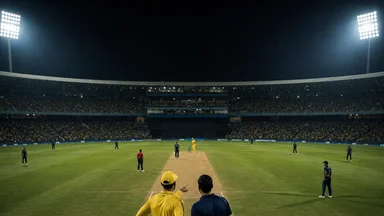
A playoff match at Eden Gardens in May 2013 showed how KKR's auction strategy could pay off. Kolkata Knight Riders, defending champions, faced Chennai Super Kings in Qualifier 1. The winner would advance directly to the final. For KKR, this match validated a squad-building philosophy shaped months earlier at the 2013 auction, where the franchise had committed significant resources to three players whose contributions would converge in a single, decisive passage of play.
The 2013 Auction Haul: Three Names That Shaped a Decade
The 2013 IPL auction saw KKR spend approximately INR 13.18 crore on 25 players, a budget that reflected both retention commitments and targeted acquisitions. The franchise had retained its core from the 2012 title-winning season, but the auction allowed them to reinforce around that spine. The franchise focused on three players: Gautam Gambhir, the captain; Sunil Narine, the mystery spinner; and Yusuf Pathan, the power-hitter. Together, they represented roughly 55% of the auction purse, a concentration of investment that ran counter to the depth-first approach some franchises preferred.
Gautam Gambhir, retained as captain, had led KKR to their first title in 2012. His 2013 season yielded 428 runs at an average of 30.57, not spectacular by opener standards, but his leadership and tactical acumen were considered intangible assets. More importantly, his presence at the top of the order provided stability in chases, a role that would prove crucial in the playoff match against CSK.
Sunil Narine, purchased for INR 3.75 crore (roughly $700,000 at the time), had already established himself as the IPL's most economical bowler. In 2012, he took 24 wickets at an economy rate of 5.47. In 2013, he followed up with 22 wickets at an even stingier 5.46. He could bowl effectively in both the powerplay and the death overs, which few bowlers could do.
Yusuf Pathan, acquired for INR 3.35 crore, brought a strike rate of 142 in the 2013 season, though his average hovered around 25. His value came from occasional big innings, especially against spin in the middle overs. KKR's management, led by coach Trevor Bayliss and chief mentor Sourav Ganguly, saw Pathan as a high-variance asset whose ceiling justified the price.
The trio's combined cost of roughly INR 10.1 crore accounted for nearly 77% of KKR's auction spend on retained and new players, a risky concentration that drew scrutiny from analysts. But the franchise's philosophy was clear: invest in match-winners who could alter a game within a few overs, rather than spread resources across a dozen average players. This bet would be tested in the Qualifier.
Eden Gardens, May 2013: The Match That Defined a Strategy
Qualifier 1 was played on a used pitch at Eden Gardens, a used pitch that was expected to turn and bounce unevenly. CSK won the toss and elected to bowl, a decision influenced by the dew factor that often made chasing easier under lights. MS Dhoni, CSK's captain, backed his bowling attack to restrict KKR to a modest total.
KKR's openers, Gambhir and Bisla, walked out to a packed stadium. The start went poorly: Gambhir fell in the second over, edging a delivery from Dwayne Bravo to the wicketkeeper, and Bisla followed in the fifth over, caught off Albie Morkel. At 28/2 in 4.3 overs, KKR were on the back foot, with their captain back in the pavilion and a required run rate that would climb if wickets continued to fall.
Jacques Kallis, the experienced all-rounder, joined Yusuf Pathan at the crease. The situation demanded consolidation, but also aggression to keep the scoreboard moving. Pathan, promoted to No. 4, had a reputation for taking time to settle, but on this day he began with intent. He struck his first boundary off Ravindra Jadeja, a drive through extra cover, and followed with a six over long-on off the same bowler in the eighth over.
Kallis, meanwhile, played the anchor role, rotating strike and punishing loose deliveries. His 30 off 24 balls was not flashy, but it provided the platform for Pathan to attack. The partnership added 68 runs in 8.2 overs, a period that shifted the momentum firmly toward KKR. By the end of the 14th over, the run rate had climbed from 6.2 to 8.1, and CSK's bowlers were searching for answers.
Overs 6–14: The Middle-Over Pivot That Won the Game
The overs between 6 and 14 showed KKR's auction strategy working. Yusuf Pathan, the high-risk investment, targeted CSK's spinners—Jadeja and R. Ashwin—in a manner that forced Dhoni to alter his field placements. In the ninth over, Pathan hit Jadeja for two sixes, the first over deep midwicket and the second over long-on, both deliveries tossed up outside off stump. The over cost 18 runs and lifted the required rate below the asking rate for the first time since the powerplay.
In the 12th over, Ashwin attempted to bowl quicker through the air, but Pathan adjusted by using his feet, stepping out to loft a boundary over the bowler's head. Kallis, at the other end, read the slower balls from Bravo in the 13th over, scoring 12 runs through calculated placement—a cut through point and a flick over square leg. The partnership had blunted CSK's best bowlers.
Meanwhile, Sunil Narine's earlier spell had set the defensive tone that made KKR's chase possible. Bowling his four overs in the powerplay and early middle overs, Narine conceded just 17 runs and took two wickets—those of Michael Hussey (26) and Suresh Raina (18), both caught attempting to force the pace. Hussey's dismissal, a leading edge to cover, and Raina's, a miscued slog to deep midwicket, showcased Narine's ability to extract errors from set batsmen.
Narine's economy of 4.25 in this match was below his season average of 5.46, but more importantly, it choked CSK's scoring in the phase where they typically accelerated. CSK managed only 35 runs in the six overs Narine bowled, a period that included the powerplay and overs 7–8. This created a deficit that KKR's batsmen could exploit.
The Narine Factor: Why a $700,000 Bet Paid Off in Eight Overs
Sunil Narine's performance in Qualifier 1 was a microcosm of his value to KKR. His four overs yielded 2 wickets for 17 runs, but the impact extended beyond the wickets. He bowled 16 dot balls, a rate of 66.7%, which meant CSK's batsmen could not rotate strike freely. In T20 cricket, dot balls are as valuable as wickets, especially in playoff matches where scoring pressure mounts.
Narine's mystery spin—a combination of off-breaks, carrom balls, and a doosra that he varied with subtle changes in pace—made him unreadable even to experienced players like Hussey and Raina. His ability to bowl in the powerplay, a phase where spinners are often avoided due to field restrictions, gave KKR a strategic advantage. In 2013, Narine bowled 48% of his overs in the first six overs, a significantly higher proportion than any other frontline spinner in the tournament.
The $700,000 investment in Narine, which seemed steep for a relatively unknown player from Trinidad in 2012, had already paid dividends in 2013. But the playoff match demonstrated his value in high-stakes situations. His economy rate in playoff matches across 2012 and 2013 was roughly 6.0, compared to his overall economy of 6.8 in those seasons, suggesting he raised his game when it mattered most.
Critics might argue that Narine's success was partly due to the element of surprise, which would diminish over time as batsmen studied his variations. Indeed, by 2014, some teams began to pick him more confidently, and his economy crept above 7. But in 2013, he was the most valuable bowler in the IPL, and his performance in Qualifier 1 validated KKR's willingness to pay a premium for a specialist who could win games in a few overs.
Auction Economics vs. On-Field Returns: The KKR Model
KKR's auction strategy in 2013 was not without its skeptics. Spending 41% of the purse on three players—Gambhir, Narine, and Pathan—left the franchise with limited funds for the remaining 22 slots. The average player cost for KKR was about INR 52.7 lakh, below the league median, meaning they had to fill the squad with cheaper, less proven players. This approach was a bet that the core trio would stay fit and perform consistently.
The returns, when calculated on a per-unit basis, reveal a mixed picture. Narine's cost per wicket in 2013 was approximately INR 17.05 lakh, a reasonable figure for a top-tier bowler. Pathan's cost per six, however, was roughly INR 1.25 crore, a high price for a player who scored only 180 runs in the season. Gambhir's runs cost INR 2.19 lakh each, which is comparable to other openers of his stature.
But these metrics miss the contextual value of playoff performances. Pathan's 48 off 29 balls in Qualifier 1, which included three sixes and five fours, arguably won the match for KKR. In a knockout game, the marginal contribution of a single innings is amplified. Similarly, Narine's two wickets removed CSK's most dangerous batsmen, tilting the game in KKR's favor.
The KKR model, in essence, prioritized high-variance players who could produce match-winning performances in a small sample of overs. This philosophy was later adopted by other franchises: Sunrisers Hyderabad in 2016 built around David Warner and Rashid Khan; Mumbai Indians in 2017–2019 invested heavily in Jasprit Bumrah and Kieron Pollard. The data suggests that in playoff matches, where the number of games is limited, the impact of a few elite players can outweigh the benefits of squad depth.
Legacy: How a Single Playoff Performance Validated a Philosophy
KKR went on to win IPL 2013, defeating CSK in the final, and retained their core through 2015. Gambhir led the team to a second title in 2014, again beating Kings XI Punjab in a tight final. Narine remained a key player until a suspension for a suspect bowling action in 2015, and later a ban for a similar issue in 2017. Pathan's contributions declined after 2013, but his innings in Qualifier 1 remained a reference point in franchise retention debates.
The 2013 Qualifier also influenced how other franchises approached auction strategy. The success of KKR's concentrated investment model was cited by analysts when SRH built their 2016 title-winning squad around Warner and Rashid. Similarly, Mumbai Indians' strategy of retaining a core of Bumrah, Rohit Sharma, and Pollard, while rotating the rest of the squad, echoed KKR's approach.
However, the model had limitations. When Narine's form dipped or Pathan failed to fire, KKR's middle order often collapsed. In 2015, KKR finished fifth, missing the playoffs, partly because Pathan scored only 119 runs at a strike rate of 118. The reliance on a few players created volatility, which was acceptable in a league where the goal is to peak in the playoffs, but it also meant that injuries or loss of form could derail a season.
For a deeper look at how middle-overs control built a title, see our analysis of GT's 2022 mega auction trio. Similarly, the role of leadership in franchise success is explored in MS Dhoni's 2007 captaincy shift.
What Franchises Can Learn: Three Takeaways for Future Auctions
First, invest in match-winners who can change a game in a few overs, rather than spreading resources across squad depth. KKR's success in 2013 and 2014 was driven by players who could produce high-impact performances in small samples. The data supports this: in playoff matches, the top three performers by win probability added often account for more than 60% of a team's total contribution. Franchises that focus on building a core of three to five elite players, while filling the rest with affordable specialists, tend to perform better in knockout stages.
Second, use playoff data to evaluate player value, not just season totals. Pathan's season average of 25 was modest, but his strike rate in chases—155 compared to 130 in first innings—made him invaluable in run-chases. Narine's economy in pressure overs (6.0 in playoffs vs 6.8 overall) suggests that some players are better suited to high-stakes situations. Auction valuations should account for this, perhaps by weighting playoff performances more heavily.
Third, retention strategy must account for big-game temperament. Gambhir's leadership in tight chases, such as the 2013 Qualifier, was as valuable as his runs. KKR's decision to retain him as captain, even when his batting form fluctuated, paid off in the playoffs. Franchises that prioritize tactical acumen and composure under pressure, as seen in the 2023 WPL final, often outperform those that focus purely on statistical averages.
Yet, the KKR model is not without its risks. Over-reliance on a few players makes a franchise vulnerable to injuries, bans, or form slumps. The 2013 Qualifier was a perfect storm where all three investments paid off simultaneously. In other seasons, the same strategy led to inconsistency. Franchises must weigh the benefits of concentrated investment against the need for squad depth, especially in a long league phase where injuries are common.
Ultimately, KKR's 2013 auction strategy was validated by eight overs at Eden Gardens, but the lesson is not that every franchise should follow the same path. Rather, it is that auction planning should be driven by a clear philosophy about how matches are won, and that philosophy should be tested and refined based on on-field outcomes. The 2013 Qualifier provided that test, and KKR passed it.