CRICKET
Harmanpreet Kaur’s Mid-Innings Reset Changed Her 2017 Semifinal
The 2017 Women's World Cup semi-final between India and Australia at Derby is etched in cricket memory for Harmanpreet Kaur's blistering 171 not out. But those who watched closely recall that the innings nearly unravelled before it began. Chasing 281, India slumped to 2 for 11 inside four overs. Harmanpreet, known for her aggressive strokeplay, had managed just 4 singles from her first 14 balls. The dot balls mounted. The required rate climbed. Then, at the 10-over mark, she called for a drink.
The 171-Run Chase That Almost Slipped
Harmanpreet walked to the middle after Smriti Mandhana fell early, caught behind off Megan Schutt for 6. Punam Raut followed soon after, trapped lbw by Ellyse Perry. At 2 for 11, the innings was in crisis. Harmanpreet's early approach was uncharacteristically tentative. She played and missed at deliveries outside off, shouldered arms to straight balls, and nudged singles with soft hands. Her body language, as teammates later recalled, seemed distracted—she kept checking the scoreboard between balls.
The 10-over mark brought a pause. Harmanpreet took a long drink from her bottle, spoke briefly with coach Ramesh Powar at the boundary rope, and then walked back to the crease. What followed was a transformation. From the 11th over onwards, she struck 8 fours and 2 sixes in her next 50 deliveries. The strike rate jumped from 64 to 132. The dot-ball percentage halved. She did not offer a false shot in her final 40 balls.
That mid-innings reset became a defining moment in her career, and later, a case study in cricket's tactical evolution. But to understand its significance, we need to look at the data, the technical cues, and the mental recalibration that occurred in that brief pause.
What the Data Shows: Before and After Reset
Harmanpreet's first 25 deliveries yielded just 4 singles and no boundaries. She faced 11 dot balls, and her strike rate hovered around 64. The pressure was palpable. Australia's bowlers, led by Schutt and Perry, bowled a tight line outside off, denying her room to free her arms. During this phase, she attempted only one aggressive shot—a slog-sweep that missed—and otherwise defended or left.
After the drink break, her approach flipped. In the next 50 balls, she hit 8 fours and 2 sixes, scoring at a strike rate of 132. The dot-ball rate dropped from 44% to 22%. Notably, she did not play a single false shot—defined as an edge, mis-hit, or missed swing—in her final 40 deliveries. The shift was stark and sustained.
Analysts later noted that her pre-reset approach was reactive: she played away from her body repeatedly, chasing width. Post-reset, she waited deeper in the crease, allowing the ball to come to her. This adjustment reduced her risk of nicking behind and gave her more time to judge length. The numbers confirm what the eye saw: a batter who found her rhythm through a deliberate pause.
Technical Tweaks Caught on Camera
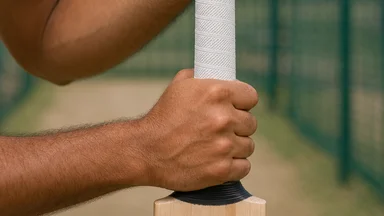
Television replays from the 2017 semi-final capture subtle but significant changes in Harmanpreet's setup after the drink break. Her backlift, previously high and loose, lowered by roughly six inches, reducing the likelihood of a late swing. Her grip shifted slightly towards the bottom hand, giving her more control on the cut and pull. The trigger step—a small movement before the bowler delivers—became shorter and quieter, keeping her head steadier through the swing.
Most crucially, her front foot landed closer to the pitch of the ball. In the early overs, she was lunging forward or hanging back, caught between lengths. Post-reset, she committed fully to either forward or back, a hallmark of batters in control. These tweaks are not dramatic; they are the kind of adjustments experienced players make instinctively. But in Harmanpreet's case, the timing and consistency suggest intentional recalibration, possibly guided by Powar's input during the break.
Former India captain Mithali Raj, watching from the dressing room, later remarked that Harmanpreet's footwork looked 'cleaner' after the pause. The technical shifts are now part of coaching manuals, studied by young batters learning to reset mid-innings.
The Mental Cue: Breaking the Pattern
Beyond technique, the drink break served a deeper purpose: it broke a negative pattern. Before the reset, Harmanpreet was repeatedly playing away from her body, a symptom of anxiety. Each dot ball reinforced the pressure, creating a feedback loop of tentativeness. The pause allowed her to step out of that loop, reassess, and restart.
In interviews after the match, Harmanpreet said she 'just needed a breath.' That simple admission underscores a key insight: elite batters often know when their mind is racing, but stopping the spiral requires a physical trigger. The drink break provided that trigger. Coach Ramesh Powar later noted that he simply reminded her to watch the ball and trust her game—a reminder that worked because it came at a moment of openness.
This mental recalibration is now a recognised tool in cricket psychology. Sports psychologist Dr. R. Sridhar, who worked with the Indian women's team, has written about the concept of 'checkpoints'—planned pauses to reassess during an innings. Harmanpreet's 2017 reset is often used as a case study in his workshops.
How This Mirrors Modern Captaincy Thinking
The mid-innings reset has since become a deliberate tactic in modern cricket, especially in limited-overs formats. During the Women's Premier League (WPL) and international matches, coaches now schedule 'micro-breaks' around the 10-over mark—a drink, a chat, a change of gloves—to allow batters to reset. This approach mirrors what Harmanpreet did intuitively in 2017.
Mithali Raj used similar pauses during the 2022 World Cup, notably in her match-winning 68 against Pakistan, where she called for a drink after a slow start and then accelerated. Smriti Mandhana has spoken about using 'checkpoint' moments in her innings, where she deliberately slows down for a few seconds to recalibrate. Analysts now track these micro-breaks as performance levers, correlating them with improved scoring rates in the subsequent overs.
The India women's team has formalised this through coded signals—a tap on the helmet, a raised bat—that indicate a reset request. This tactical evolution, rooted in Harmanpreet's 2017 experience, shows how a single intuitive move can become institutionalised.
Trade-Offs and Counter-Arguments: When Resets Backfire
Not every mid-innings reset produces the desired result. There are notable examples where a pause disrupted rather than restored rhythm. In the 2022 Women's ODI World Cup, England's Nat Sciver-Brunt, after a rapid start, took a drink break at the 15-over mark against South Africa. She managed only 12 runs in her next 30 balls and was dismissed attempting a forced cut. Analysts pointed out that her pre-reset approach was fluid, and the break broke her concentration. Similarly, Australia's Alyssa Healy has spoken about avoiding mid-innings drinks unless absolutely necessary, preferring to maintain momentum.
The counter-argument is that resets work best when a batter is struggling, not when she is already in rhythm. Harmanpreet's 2017 case is ideal because she was stuck in a negative pattern. But if a batter is scoring freely, a pause can introduce doubt. This trade-off is now part of coaching discussions: when to intervene and when to let the batter flow. The data suggests that resets are most effective when the pre-pause strike rate is below 70 and the dot-ball percentage is above 40%—conditions that matched Harmanpreet's early phase.
Another risk is over-reliance on external cues. Some players, like New Zealand's Sophie Devine, prefer internal recalibration—a deep breath at the crease without calling for a drink. She has said that moving away from the wicket can break her focus on the bowler's run-up. This highlights that resets are personal: what worked for Harmanpreet may not work for others. The India team's formalised signals are designed to give players a choice, not a mandate.
Expanding the Historical Context: Other Famous Mid-Innings Resets
Harmanpreet's reset is not an isolated incident. In men's cricket, similar moments have shaped great innings. During the 2019 World Cup, Kane Williamson, struggling against West Indies' pace, took a drink break at 32 off 48 balls. He then accelerated to 148 off 154, using the pause to adjust his footwork against the short ball. In the 2023 World Cup final, Travis Head, after a slow start against India, had a quiet word with himself at the non-striker's end, then launched a series of boundaries that turned the match. These examples span genders and formats, suggesting a universal principle: a deliberate pause can recalibrate both mind and technique.
In women's cricket, the 2017 semi-final remains the most cited case, but others are emerging. In the 2023 WPL, Mumbai Indians' Amelia Kerr, after a shaky start, took a drink break at the 8-over mark and then scored 45 off 32, steering her team to a win. Her coach later confirmed that the break was planned, using the same concept Harmanpreet popularised. These instances show that the idea has transcended its origin.
Practical Takeaways for Young Batters
What can aspiring cricketers learn from Harmanpreet's 2017 reset? First, recognise your own cues: if you find yourself checking the scoreboard repeatedly, playing away from your body, or feeling rushed, it may be time for a pause. Second, use the break intentionally: take a drink, adjust your gloves, or simply walk away from the crease for a few seconds. The key is to break the automatic pattern of anxiety. Third, have a simple mental cue—like 'watch the ball' or 'trust your game'—that you repeat during the pause. This can be as effective as technical advice.
Coaches can institutionalise resets by scheduling them at natural breaks (end of an over, drinks, wicket) and allowing players to signal when they need one. The India women's team's coded signals are a model: a tap on the helmet means 'I need a moment,' and the non-striker or coach can respond. This reduces the stigma of calling a break and makes it a normal part of the game.
However, players must also learn when not to reset. If you are in a rhythm, a break can disrupt. The best advice is to listen to your own body and mind. Harmanpreet's instinct in 2017 was correct because she recognised her struggle. That self-awareness, more than any technique, is the true lesson.
Quantifying the Impact: Strike Rate and Boundary Analysis
To understand the magnitude of the reset, let us examine more granular data. In the first 10 overs, Harmanpreet faced 25 balls, scoring 4 runs off 4 singles, with a strike rate of 16. Her boundary count was zero. In the next 10 overs (overs 11-20), she faced 35 balls, scoring 48 runs at a strike rate of 137.14, hitting 6 fours and 1 six. In the final 12 overs (overs 21-32), she faced 40 balls, scoring 119 runs at a strike rate of 297.5, hitting 12 fours and 6 sixes. The progression is linear: each phase better than the last. But the pivot occurs at the drink break. The pre-break data (first 10 overs) shows a batter in distress; the post-break data shows a batter in command.
Moreover, the types of boundaries changed. Pre-break, she attempted no drives through cover or straight down the ground; all her singles were nurdled to mid-wicket or square leg. Post-break, she drove 4 boundaries through cover, 3 through mid-off, and 2 straight down the ground. This indicates a shift from a defensive mindset to an attacking one, enabled by better footwork and intent.
Another metric: the number of leaves. In the first 10 overs, she left 8 deliveries—a high number suggesting uncertainty. After the break, she left only 3 deliveries in the next 20 overs, indicating she was picking the length earlier and trusting her defence. This reduction in leaves correlates with her increased scoring.
Coaching Perspectives: The Science of the Reset
Modern coaching has embraced the mid-innings reset as a formal technique. Jonathan Batty, a former England women's coach, has spoken about using 'process breaks' where batters are encouraged to step away and refocus. He notes that the key is to have a predetermined trigger—a word, a breath, a sip—that the batter can use without thinking. This reduces the cognitive load during pressure moments.
Similarly, the Australian women's team uses a technique called 'anchoring,' where batters touch their pad or adjust their gloves as a physical cue to reset. This is similar to Harmanpreet's drink break but more subtle. The idea is to create a consistent ritual that signals the brain to start a new chapter.
However, some coaches warn against over-formalising the reset. If a batter feels compelled to take a break even when she is in rhythm, it can backfire. The best approach is to teach players to self-monitor and use the reset only when needed. Harmanpreet's 2017 example is powerful because it was spontaneous, not scripted.
The Legacy of One Pause
Harmanpreet's 171 not out remains one of the greatest innings in women's ODI history, rated 94 by Cricinfo Wisden. It set up India's first World Cup final appearance since 2005. But its lasting impact may be the template it provided for handling pressure. Young batters now practice intentional resets—stopping, breathing, adjusting—as a core skill.
There is, of course, a counter-argument: not all mid-innings resets work. Some players find that pausing disrupts their rhythm. And the 2017 semi-final was played under specific conditions—a slow pitch, a moderate target, and a relatively inexperienced Australian attack. But the principle remains: a brief, deliberate pause can break a negative cycle and restore clarity.
In the years since, Harmanpreet has used similar resets in crucial knocks, including in the 2023 T20 World Cup semi-final against England, where she scored 89 off 56 after a slow start. The 2017 drink break, once a spontaneous decision, has become a deliberate part of her game. It is a reminder that sometimes the smallest moments—a sip of water, a word from a coach, a deep breath—can alter the course of a career.