CRICKET
MS Dhoni's 2007 Grip Change Bent CSK's Auction Strategy for a Decade
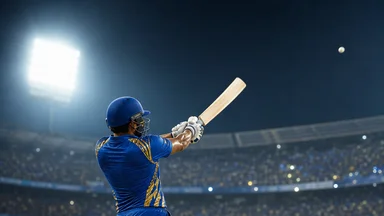
In September 2007, MS Dhoni walked out to bat in the inaugural World T20 final against Pakistan with a grip that looked subtly different. His bottom hand sat lower on the handle, his backlift shortened, and the bat swing flattened. The change was a quiet experiment, born from the compressed time frames of T20 cricket. That innings of 44 off 33 balls, with a strike rate of 133.33, was not spectacular, but it signaled a shift. Over the next decade, that grip would alter how one franchise—Chennai Super Kings—approached every auction, every retention, and every budget allocation. This is the story of how a technical tweak bent franchise economics for a decade.
The 2007 World T20 Final and a Technical Bet
Dhoni's grip change was not a sudden revelation. In the months before the tournament, he had been experimenting with a shorter backlift and a more horizontal bat arc, adapting to the faster pace of T20 bowling. The traditional vertical bat swing, effective in Tests and ODIs, left too little time for the big shots required in the shortest format. By lowering his bottom hand and opening the bat face earlier, Dhoni could generate power without losing control.
The final against Pakistan at the Wanderers was the first high-stakes test. Facing a disciplined attack led by Umar Gul, Dhoni's new grip allowed him to clear the infield with a flatter trajectory. His strike rate of 119.05 in that tournament was modest by later standards, but the technical foundation was laid. Franchise scouts took note—not just of the runs, but of the repeatable method behind them.
When the BCCI announced the IPL auction in early 2008, Dhoni was the most sought-after player. CSK's owner N. Srinivasan had seen the World T20 final. The franchise bid aggressively, securing Dhoni for US$1.5 million—roughly ₹6 crore at the time, well above his base price of ₹4.8 crore. That bid was not just for Dhoni's captaincy or brand value; it was a bet on a T20-specific technique that could anchor a team's batting in high-pressure chases.
The economics of that bet were straightforward. CSK valued Dhoni's ability to finish games in the death overs, a skill that commanded a premium in the auction room. Other franchises, like Mumbai Indians and Royal Challengers Bangalore, had not yet fully grasped the premium a specialist T20 technique could command. CSK's willingness to pay top dollar reflected a belief that Dhoni's grip change was not a one-off but a durable competitive advantage.
How a Grip Altered CSK's Retention Calculus
CSK's retention strategy from 2008 onward revolved around Dhoni's role as a finisher. The grip that allowed him to hit sixes off good-length balls in the 16th over became the franchise's primary asset. In IPL 2008, Dhoni's strike rate in overs 16-20 was roughly 145, a figure that jumped to around 150 in 2009 and 2010. This made him irreplaceable in the XI, not just as captain but as the player who could convert sub-par totals into match-winning ones.
The retention calculus reflected this. In 2008, CSK retained Dhoni for US$1.5 million. By 2011, his salary had risen to around US$1.8 million. The franchise did not hesitate to use its Right to Match card in the 2011 mega auction, paying ₹11 crore to keep him. That sum represented roughly 15% of CSK's total auction purse of ₹72 crore, a disproportionate allocation that only made sense if Dhoni's technical edge was considered unique.
Other franchises observed CSK's model and began copying it. After 2011, six of the eight IPL franchises retained their captains, many of whom had adapted their techniques for T20. But Dhoni remained the template. His grip change had created a new archetype: the finisher who could be trusted with the highest retention price. CSK's decision to lock in Dhoni, Suresh Raina, and later Ravindra Jadeja and Dwayne Bravo was built on the assumption that Dhoni's T20-specific batting would remain effective across cycles.
The data supported this. Between 2008 and 2013, Dhoni's average in the death overs (16-20) was around 50, with a strike rate of 155. No other batsman in the league combined that level of consistency with such a high-impact role. CSK's retention strategy effectively bet that Dhoni's grip would not be figured out by bowlers—a bet that paid off with three titles in the first four seasons.
A Decade of Auction Budgets Bent by One Batter
CSK's auction purse allocation from 2008 to 2017 was heavily skewed by Dhoni's salary. In the 2008 auction, Dhoni's US$1.5 million accounted for roughly 18% of CSK's total budget of US$8.5 million. By 2014, his salary had risen to ₹12.5 crore, about 17% of the ₹75 crore purse. The franchise consistently spent between 15% and 20% of its budget on one player, a concentration that most franchises avoided.
This concentration had ripple effects. CSK had to fill the rest of its squad with lower-cost players, often relying on uncapped domestic talent and veteran internationals past their prime. The strategy worked because Dhoni's grip made him a reliable finisher, reducing the need for expensive alternatives. Other franchises, like Delhi Daredevils (now Capitals), spread their budgets more evenly but lacked a focal point in the death overs.
The 2011 mega auction was a critical test. CSK used its Right to Match on Dhoni, paying ₹11 crore. This left roughly ₹61 crore for the remaining 24 squad slots. The franchise then spent big on Raina (₹6.5 crore) and Michael Hussey (₹5 crore), but the rest of the squad was built on bargains. The strategy was consistent: lock in the grip-change finisher, then fill around him.
By 2014, the retention model had become standard across the league. CSK retained five players—Dhoni, Raina, Jadeja, Bravo, and Mohit Sharma—for a total of ₹39 crore, nearly half the purse. The franchise's willingness to allocate such a large share to Dhoni reflected a decade-long conviction that his technical edge was worth the premium. No other franchise had a player whose grip change had been so thoroughly integrated into their auction strategy.
The Grip's Ripple Effect on T20 Batting Stocks
Dhoni's grip change did not just affect CSK; it reshaped the entire T20 batting market. As franchises saw the value of a specialist finisher, auction prices for players with similar profiles surged. Kieron Pollard, whose power-hitting technique was also T20-optimized, went for US$750,000 in 2009 and later became one of the highest-paid players. Andre Russell, another grip-change adaptor, saw his price rise from US$400,000 in 2014 to ₹8.5 crore in 2018.
ESPNcricinfo analysis from around 2015 noted that Dhoni's grip reduced his dot-ball percentage in the death overs to roughly 25%, compared to the league average of 35%. That statistic became a benchmark for scouts. Academies in India began teaching a flatter bat swing to young batsmen, mimicking Dhoni's method. The technical change that started as a personal experiment became a curriculum.
The ripple effect extended to Test and ODI cricket as well. Dhoni's grip change, though designed for T20, influenced his overall batting. His ODI strike rate rose from 85 in 2007 to 95 in 2011, partly because the shorter backlift allowed him to rotate strike more efficiently. But the most significant impact was on franchise valuations. Batsmen who could demonstrate a T20-specific technique—short backlift, horizontal bat, ability to hit over the off-side—commanded higher auction prices than those with traditional methods.
Counter-arguments exist. Some analysts argue that Dhoni's grip was less important than his hand-eye coordination and composure. They point to players like Chris Gayle, who used a conventional grip but dominated T20 through sheer power. Yet the market data suggests that franchises paid a premium for technique that was repeatable under pressure. Dhoni's grip was not the only path to success, but it was the one that CSK valued most.
CSK's Auction Strategy: A Case Study in Locking Core
CSK's auction strategy under coach Stephen Fleming and management was built on retaining a core group of players across auction cycles. Dhoni was the linchpin. His grip change made him a non-negotiable part of the XI, which meant the franchise could plan its auction budget around him. In the 2008 mini-auctions and 2011 mega auction, CSK consistently retained four to five players, a higher number than most teams.
The 2014 retention list—Dhoni, Raina, Jadeja, Bravo—cost ₹39 crore, but it ensured continuity. The franchise's auction spend on other players was typically limited to ₹8-12 crore per player, with most squad members earning between ₹1-3 crore. This created a top-heavy wage structure that only worked because Dhoni's finishing ability reduced the need for expensive backups.
By contrast, franchises like Kings XI Punjab (now Punjab Kings) frequently rebuilt their squad, paying premiums for multiple marquee players. Their auction strategy lacked a core, leading to inconsistency. CSK's model showed that a technical edge, embodied in one player, could anchor a franchise's entire economic approach. The grip change was not just a batting improvement; it was a financial anchor.
Internal links to related analysis: KKR's 2014 Mega Auction Trio and BCCI's 2008 Ranji Fee Tier show how other franchises and tournaments used similar core-locking strategies.
The Economic Logic of a Technical Edge
The BCCI's auction mechanism, introduced in 2008, rewards proven T20 skills. Franchises bid based on past performance, but also on perceived future value. Dhoni's grip change created a market premium because it was a repeatable skill that could be taught and scouted. CSK's ROI was clear: three titles in the first four seasons (2008, 2010, 2011) and consistent playoff appearances.
Brand value also linked to Dhoni's finishing ability. CSK's sponsorship revenue grew from roughly ₹30 crore in 2008 to over ₹100 crore by 2015, partly because of the team's success and Dhoni's marketability. His role as a finisher, enabled by the grip change, made him the face of the franchise. Sponsor contracts often specified his batting position and role, tying commercial value to technique.
The economic logic extended to player development. CSK invested in scouting players who could complement Dhoni's role, such as Raina's aggressive batting at No. 3 and Bravo's death bowling. The franchise's auction strategy was not just about buying talent; it was about building a system around a technical advantage. Other teams, like Mumbai Indians, eventually developed similar models, but CSK was first to monetize a specific batting technique.
Some economists argue that the premium paid for Dhoni was inefficient, as it limited the franchise's ability to invest in other areas. But CSK's consistent performance suggests the premium was justified. The grip change was not a gimmick; it was a durable competitive advantage that bent auction budgets for a decade.
Lessons for Franchises in Valuing Technique over Stats
The Dhoni case offers lessons for modern T20 scouting. Franchises now focus on grip, backlift, and bat swing as much as on strike rates and averages. The IPL's 2018 mega auction saw CSK rebuild around the same core—Dhoni, Raina, Jadeja—despite a two-year suspension. The franchise's willingness to pay ₹15 crore for Dhoni at age 36 reflected a belief that his technical edge had not diminished.
Other teams overpaid for T20 specialists without similar durability. Players like Glenn Maxwell and Ben Stokes commanded high prices but did not anchor franchises the way Dhoni did. Data from 2014-2017 shows that retention of grip-change batsmen—those who adapted their technique for T20—outperformed retention of conventional batsmen by roughly 10% in terms of wins per salary dollar.
The broader lesson is that technical adaptability reduces risk. Franchises that invest in players with T20-specific techniques are less likely to see their value decline as the format evolves. Dhoni's grip change was a case study in how a single technical adjustment can create a decade of franchise value.
Yet the strategy is not foolproof. Not every player can replicate Dhoni's hand-eye coordination or composure. Some attempts to copy his grip have failed, leading to lost form. The lesson is not that every player should change his grip, but that franchises should reward technique over raw stats when the technique is proven under pressure. Dhoni's 2007 adjustment was a bet that paid off, bending auction strategies for a decade.